CONTAINER REPAIR METHODS, COMPARED
The CONTREP Difference
Explore three common container repair scenarios. See how traditional manual methods and panel replacement compare to the speed, efficiency, and versatility of CONTREP.
Common methodWith CONTREP
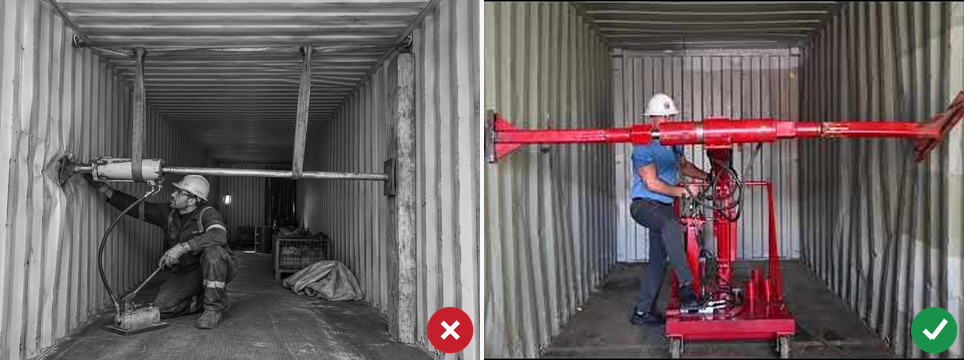
Wall dents
Traditional manual piston setups often require extensive positioning, additional supports, and time-consuming adjustments, all while presenting potential safety risks. CONTREP eliminates these inefficiencies with three integrated hydraulic pistons that allow a single operator to position and deploy the repair piston at any height of the container. With simple lever-operated controls, wall repairs become faster, safer, and significantly more efficient.
Common methodWith CONTREP
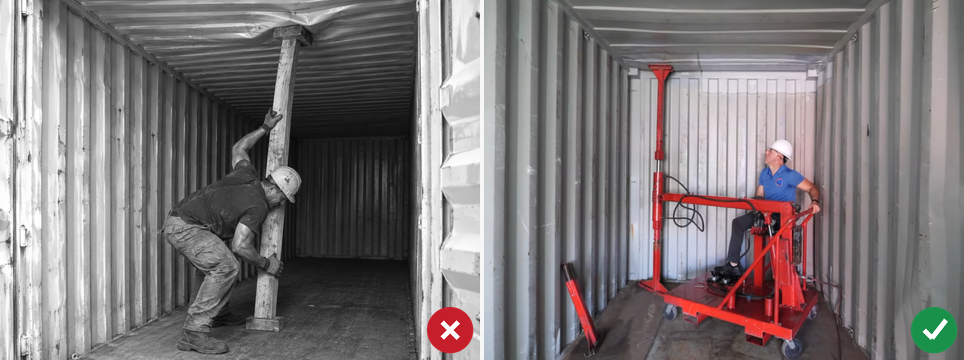
Ceiling dents
Ceiling dents are among the most challenging container repairs, often requiring improvised overhead supports and makeshift tools that compromise safety, consistency, and efficiency. CONTREP replaces these hazardous methods with a purpose-built vertical repair configuration, allowing a single operator to position the system, install the appropriate attachments, and perform ceiling repairs quickly and efficiently without cumbersome overhead setups.
Common methodWith CONTREP
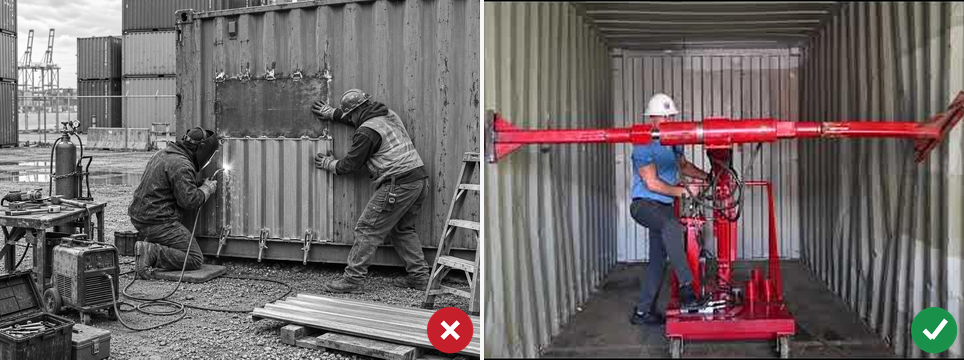
Panel replacement
Severe dents and bulges can exceed the capabilities of conventional manual repair tools, often forcing repair yards to cut out and replace entire sections of damaged container walls. CONTREP’s powerful pneumatic-hydraulic system can correct damage that traditional methods struggle to address, significantly reducing the need for costly panel replacements and helping operators save time, labor, and materials.
These images illustrate repair methods and configurations. The right approach depends on the type and severity of the damage.
See CONTREP at work
Ask about purchase or lease options, or request an on-site demonstration.